Season 7@50. An episode mostly devoted to searching
for the wounded reptile, part 3 consolidates the story without adding a lot to
it. This works well due to the sweep of the search that we’re shown. These were
the days when Doctor Who appeared to
look expensive and expansive hence a helicopter is deployed to fly around
moorland and there are even shots from it looking down over a substantial
number of searchers. The production
marshals this so confidently with director Timothy Combe determined to show us the
widest views and there is even a confident parping theme accompanying the
search. Doctor Who has rarely seemed
so solid and real as it does in these scenes.
Vintage 70s and 80s Doctor Who plus 2000s revival. Includes archive fanzine material - reviews, memories, merch, fandom, spin offs and more. X (aka Twitter- @JohnConnors100, Instagram- JohnConnors100
February 14, 2020
February 07, 2020
The Silurians Episode 2 review
Season 7@ 50. The
speed at which episode 1 played out hardly slows for the second part. This
episode is a particular example of clear scripting that avoids too many scenes
of people talking about what they will do instead cutting straight to us seeing
them doing it. Any potential gaps are covered by lines of dialogue after the
fact. For example there is no scene where people find out the Doctor has gone
down to the caves, instead we cut straight to the plans to find him. I also like the fact that, as everyone is
panicking and arranging rescues, the missing Doctor strolls in and asks if he can
come too! Having recently watched `Spearhead from Space` episodically week by
week it strikes me that so far the pace of `The Silurians` is much quicker, the
script far tighter.
February 05, 2020
The Silurians Episode 1 review
Season 7@50. Familiarity
can dull the impact of creative material yet there are some things which remain
absorbing even though we know their every secret for example a favourite film
or album or place. Or a Doctor Who
story like `The Silurians`. The behind the scenes situation suggests this 1970
classic could easily have been a bit of a mess. With Derrick Sherwin and Peter
Bryant having left, Barry Letts unavailable for the location filming, a 7
episode storyline and a new Doctor still finding his way it was hardly a
settled production though nothing of this makes the finished version. Instead a
confident, bold narrative offers a fresh take on the traditional `aliens on
earth` story and a compelling representation of the Doctor as a high profile agitator
rather than the low key subversive the previous incarnation had tended to be. The
first episode is masterfully assembled and played and a sign that during this
era of the programme episode ones would almost always be top class.
January 24, 2020
Spearhead from Space Episode 4 review
Season 7 @50. Watching
an episode a week you can see this is a slim storyline
which has an unfinished or rushed sense to it. The way the Doctor and Liz knock
up a machine overnight seems too perfunctory with the resulting device not
being convincingly strong enough to defeat such a powerful creature as the
Nestenes. What actually even happens there? How do those globes help `create`
the Nestene? The concept of the globes suddenly seems out of kilter with what
we’re seeing- we’ve been told this final one is the Swarm Leader but its just a
globe like the others and the Doctor has worked out that it contains nothing
sentient. Channing places it on a receptacle and some noises happen. We see
something moving in the front of the glass tank yet the tentacles that later
emerge are surely the wrong scale for the whole creature? The thing is there’s
been plenty of time and opportunity to smooth out these edges.
January 17, 2020
Spearhead from Space Episode 3 review
Season 7 @50. Meg Seeley is not be trifled with. While
earlier in this episode Ransome runs in total terror from an Auton, Meg’s
reaction to our plastic pal’s incursion is to reach for her shotgun and let
loose both barrels. Never mind UNIT, they should send her down to Auto Plastics
to sort the situation out. Even the Auton, which happily fired at Ransome,
doesn’t kill Meg on the spot as it could easily do but seems to just knock her
over. On the upside, her husband’s light fingered tendencies mean their cottage
will soon have a full stock of replacement items for all the damaged furniture.
A curious collection of scenes, episode 3 confirms the story’s slender
narrative has room to spare as you realise that most of the well remembered
moments are actually in the other episodes.
January 10, 2020
Spearhead from Space Episode 2 review
Season
7 @50. This
episode is home to some of the most filmic direction original Doctor Who ever staged. Derek Martinus
never misses an opportunity to exert maximum big screen camerawork when he can
utilising the generous locations and accentuating the creepiness of the Autons.
Shots zoom in and out at the Auton scout as it seeks the signal. There is an
almost cartoon style impact to these flourishes most noticeably in the final
shot of a terrified Ransome. It is rare to end an episode with someone other
than either the Doctor or companion in danger and odd too that we’ve already
seen an Auton in action so we know what he doesn’t.
January 04, 2020
Spearhead from Space Episode 1 review
Season
7@50.
Remarkably
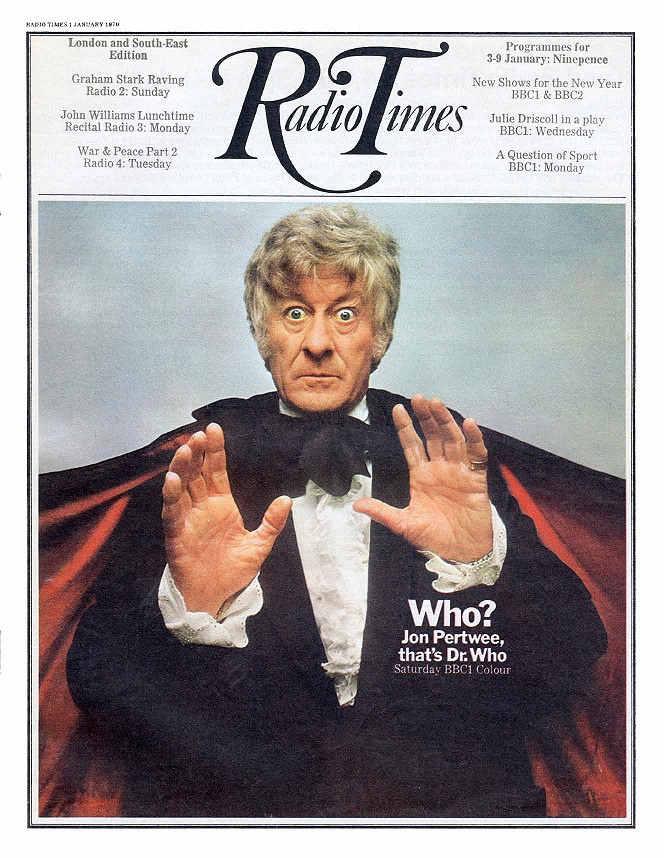
it is fifty years – half a century! -since Jon Pertwee debuted on screen as the
Doctor. A new Doctor is a tricky
proposition for which there are two ways to go. One is to make them totally eccentric
and over the top, the other is to have them largely sleeping establishing the
other characters before the Doctor wakes largely fully formed. Given that the
season 7 team had to establish a new format they
wisely plumped for the latter. It does mean that Jon Pertwee has little screen
time save for scrambling about trying to find his shoes though when he does get
the key hidden in them there’s definitely a Troughtonesque look on his face. Other
than that we don’t really get much chance to say whether we like the new Doctor
or not.
November 04, 2019
The Deadly Assassin@43
One of the most
iconic, divisive stories in the Doctor Who
canon, `The Deadly Assassin` comes loaded with baggage. With no companion and
set entirely on Gallifrey it broke the narrative mould, especially the surreal
episode 3, while certain scenes caused such strong controversy that the future
direction of the series was affected. Fans at the time pilloried it for
supposedly ruining the Time Lord mystique if not the wider mystery of the
central character. Yet this is not the whole picture. The story most resembles
one of the BBC’s classic period dramas housing a gaggle of verbose eccentrics
dressed in colourful finery, steeped in procedure and tradition. They shuffle
through the rituals as they always have and the Panopticon even has a church
organ plus a wonderfully applied echo to emphasise its cathedral like status.
If Spandrell had to catch a coach and horses to go see Engin it wouldn’t look
out of place! Doctor Who of this era
was always theatrical and populated by larger than life characters but `The
Deadly Assassin` is the chance to do this on the Doctor’s home world. It may
present a futuristic exterior but this is Victorian political melodrama of the
most enjoyable kind.
October 27, 2019
Fan Scene CT 1983 #4
October introduces us to The Sixth Doctor, 40
year old Colin Baker and the lead story has a brief resume noting he’s the first
actor to play the Doctor who had previously had a role in the series. There’s
nothing especially unusual in this announcement which comes accompanied by a
shot from the official photocall though it’s impossible not to think of what
happened next. As often is the case, the actor looks Doctorly enough in what he
was wearing that day but, oh no, someone had to conjure up a costume! That’s
all in the future in October 1983 though. Other news this month includes news
of the theft of an art display from the Blackpool exhibition with over £1,000
and guest star news for the forthcoming `Resurrection of the Daleks`. The DWAS’
20th anniversary party event which had barely been mentioned in CT
has now happened as well and it seems was successful.
October 21, 2019
Fan Scene CT 1983 #3
CT's 1983 editor
Gordon Roxburgh did not have a way with headlines. Or perhaps he just didn’t
have a lot of letraset. The July
edition has the headline `Return`. A big picture of a Dalek sort of gives away
what is returning but couldn’t he have at least managed something a bit more
dynamic than `Return`. He does go on to describe `Destiny of the Daleks` as
“dreadful” too which it isn’t. Tucked away deep inside the issue are the
results of the 1983 season poll. It seems an oddly quiet way to declare them
especially as the editor has said on the cover it is a slow news month. He
probably didn’t have enough Letraset to add the story `Mawdryn Triumphs in Season
Poll`. Yep by a margin of almost a thousand votes it is spaghetti head’s
deserved victory in a poll I remember was the easiest to vote in for years
given the varying qualities of the stories. Despite some peoples’ griping over
the dating, `Mawdryn` struck me as the season’s only classic, a rich mixture of
nostalgia and ideas. “Brigadier was superb” is the write up it gets in a tiny
summary of some views below. In second place was `Enlightenment` whose visual
extravagance masked a rather slow story but the surprise for me was seeing `Snakedance`
coming fifth beaten by both `The Kings Demons` and- gasp- `Arc of Infinity`.
The latter which I have always seen as the real turkey romps in third though if
you re-ran this poll today I bet it would trail last. You only have to see it a
second time to remember just how bad the Ergon is and how little sense the
story makes. All of which means `Terminus` is bottom proving that
disrobing companions and a giant cuddly bear are not certain to win people’s
hearts!
October 13, 2019
Fan Scene CT 1983 #2
Well actually
April and June as for some reason my
copy of the May issue is nowhere to be found. It probably turned out to be the
most newsworthy month of the year unlike April which apart from further
additions to the ever growing cast of the anniversary special is scant on news.
And still nothing about the enigmatic Tacecon! One of the more interesting
things that CT always did was include press clippings and its surprising how
much coverage Doctor Who got from the
nationals in those days. You’d imagine a fair proportion of it came from the
production office pro-actively pushing stories as the guest casts often
included well known names of the time. For example Lynda Baron’s turn in
`Enlightenment ` is the topic of a Daily Mirror piece reprinted this issue in
which the actor discusses what real female pirates were like. Elsewhere there’s
a piece about Mark Strickson joining the series and one concerning the Longleat
Celebration event in which Lord Bath is seen signing the contract under duress
from a Cyberman.
October 11, 2019
Mission to the Unknown (2019) review
Exactly 54 years after it
was broadcast, `Mission to the Unknown` or `Dalek Cutaway` or `The Beasts from UGH` is back, Back
BACK! The most stunning aspect of this
faithful remounting of one of many missing episodes is that after less than a
minute you believe you’re watching something from 1964. The tone of the
picture, the way it is acted, the tight sets and most of all the odd tilt of
those old heavy cameras all seem so authentic. Perhaps the only thing that
betrays this as a product of 2019 is that the cast are younger than possibly
anyone looked in the Sixties! The product of painstaking research courtesy of
the University of Central Lancashire this is quite an achievement.
October 04, 2019
Fan Scene - CT 1983 #1
Things had
changed a lot in the DWAS by the time the anniversary year of 1983 began. The
Society was now nearly seven years old and its newsletter CT had moved on from
the fannish enthusiasm which earlier editors had deployed. It was now very much
a factual newsletter albeit one that showed just how much activity there was in
fandom at the time. Edited by Gordon Roxburgh, the 1983 CT maintained the same
look throughout the year and was home mostly to news, longer departmental
columns, shorter headlines and zillions of fanzine adverts. Averaging 6- 8
pages per issue ensured each was packed with material. The January issue was
Gordon’s first as editor and means both the DWAS’ publications were helmed by
Scotsmen. The year started with some bad news as the last story of season 20
was cancelled due to yet another industrial dispute at the BBC. At that moment
there was no certainty even that `The Kings Demons` would be able to be
completed (don’t say anything….). September 02, 2019
Terrance Dicks 1935- 2019
Terrance Dicks was the
last of the big beasts of classic Doctor
Who and his place in the pantheon of its writers is legendary. Not only did
he oversee one of the most popular periods of the programme’s history but he
also penned many Target novels which kept us close to the series when it wasn’t
on. Later on his genial yet open responses in countless interviews earned him
the kindly sobriquet `Uncle Terrance` though he had claws when he wanted to
notably his reaction to the 1996 TV Movie or calling John Nathan-Turner “not
fit for purpose” or in reference to 70s campaigner Mary Whitehouse- “If there’s
one thing she hated more than sex, its Doctor Who”. More than anything- in
fiction and in life- he told it how it was.
July 28, 2019
The Decline of Doctor Who Fanzines
Once upon a time,
there were loads of Doctor Who fanzines
and even when the Internet arrived they thrived for a while because they
tended to go into more depth than was generally acceptable on websites or
blogs. Yet now the generational shift means that younger fans don’t really know
paper fanzines because they are growing up with the brevity and instant opinion
that current social media, blogs and forums tend to suit. Why bother
constructing an elaborate argument when you can Tweet your opinion in a handful
of words and an emoji to a greater audience than most fanzines ever achieved?
The word `fanzine` is
a simply an amalgam of `fan magazine` and was first coined as far back as 1940
by someone called Russ Chauvenet. Prior to this amateur magazines were called
fanmags or letterzines and the earliest recorded example is believed to be `The
Comet`, a science fiction zine that appeared in 1930 in Chicago. The first Doctor Who fanzine was probably `Tardis`
edited by Andrew Johnson from the mid -1970s though the BBC recognised Doctor Who Fan Club did have a monthly
newsletter which might be considered a fanzine of sorts. The boom really began
with the formation of the Doctor Who Appreciation
Society (or DWAS) in 1976. This itself was partly brought together by `Tardis` readers
and contributors as it became the Society fanzine.
Subscribe to:
Posts (Atom)